Search

Your Ad Here
Showing posts with label photography. Show all posts

Friday, October 12, 2012

Interview with Fitness/Commercial Photographer James Patrick

James Patrick is a highly published fitness and commercial photographer based in Tucson, Arizona. He is a very talented and passionate photographer. James takes pride in his work and his team. His work has appeared in the following magazines: Oxygen, Scottsdale Health, Fitness Plus, Max Sports & Fitness, Physique, World Physique, Las Vegas Sports & Fitness, Tucson Lifestyle, College Affair, Entrepreneur, FHM, Maxim, The New Southwest, Tucson Green Times, Model Scene, eGirls News, So Scottsdale, 944, Campus, RedBlue, Latino y Style, Perfectify, SW Style & Living, Tombstone Epitaph, Oro Valley|Marana, Top Pair, Tucson Women's, Young Money, Teeze, theScast, Petite Styles, Mobscene, Tucson Foothills, Biz Tucson, Iron Man, Muscle & Performance, M Fitness, CitiScapes, Fit and Firm and many more. Additionally, James works as a marketing professional, website strategist, and a public speaker covering a variety of topics including photography, marketing, and business development.

I really feel that this interview with James has given me a great insight into fitness photography and fitness modeling. If you are interested in being in the industry, I think that you will find James' responses highly useful.


AVIVA: How long have you been a photographer?
JAMES PATRICK:
I was literally tossed into the photography industry about nine years ago. I say “tossed in” because at the time I was a journalist for a small newspaper. As I was working late one night and about to head out to interview someone for a feature story my editor tossed a camera in my hands. Apparently there were no staff photographers in the office that night and I had to play double-duty of both writer and photographer. I fell in love with it instantly. From that point I had to figure out how to actually take a quality photo. I took only one photo class in college so a large portion of my development in the industry (pardon the pun) came from interning for various photographers as well as from making a lot of mistakes and learning along the way. I spent a few years working on the editorial side as a photo editor for both a newspaper and a magazine. In that field I had to manage a small staff of photographers, divvy out projects, select images for print, post process them and so on. In my mid-20s is when I really started to push myself into the freelance editorial and commercial markets.


AVIVA: Do you pre-visualize your photos or do you put all the components together as you go?
JP:
That would completely depend on the project. With a lot of my editorial clients, I will have either a sit down meeting with the Art Director or Creative Director – or at least chat through the phone. We will discuss the project in detail regarding who or what the photos are of, what the article is about, what is important to incorporate into the images. We share inspirational images back and forth and determine what we hope to achieve during the upcoming shoot. Then during the shoot we always keep our eyes open for on-the-spot creative ideas. Often times commercial shoots are also very precise in the planning stages. Many times as a photographer bidding or proposing on a job, we have to type up a fairly detailed project approach in our bid package that we send into the client. In that we state our “creative vision” for the shoot. That is exactly why any artist, including photographers, will live and die based upon their style. Their style will get them hired just as much as their style will get them overlooked. It is not about having a style that everyone likes. It is about having a style that your key niche or target client connects with. On the flip side of things, there are times where my team and I have to play the role of photographer and creative director right on set. We had that a few nights ago were we were hired to photograph a rock band at a small concert venue. We show up and the band and their manager tells us “we are open to whatever you think will look good.” Over the new few hours, my assistant and I had to fire on all creative cylinders. It worked out beautifully and the band received a variety of creative images and setups.


AVIVA: What achievement(s) in your career are you most proud of?
JP:
That is a difficult question because I look at each project my team and I take on as an opportunity to do something new, something different and something exciting. I would say what I am most proud of is that I can do what I do for a living. That I am fortunate enough to have built such a great team to work with, that I have such fantastic clients, that I can spend endless hours building something I am truly passionate about. No award, publication cover, or big budget assignment can compare to knowing that I am doing the right thing.


AVIVA: We have heard the statement: "Success in photography is 90% business and 10% photography skill". Do you agree or disagree and why?
JP:
I may push it as far as success is 99% business and 1% photography. A photographer needs the skills, but just being able to take great images is not nearly enough. One of my favorite authors Daniel H. Pink stated “Persistence trumps talent.” I could not believe that more. I see brilliant photographers get passed up by those who, although may not be as talented, had a little more grit and will and drive to succeed. It surprises me that more art schools are not teaching basic business courses for their students. Standard things like how to do book-keeping, how to do taxes, understanding local laws and regulations (if there are any), and most importantly – how to market yourself. Every year I am privileged to return to my alma mater to speak to college photographers on what it takes to define their brand and then how they can go about marketing that brand to build their business. If one were to look at my bookshelf, they will see a bevy of books on photography for sure. However they will see three times as many books on marketing and business. That goes back to me being insanely curious. I love to learn and marketing is a universal language that can be applied to so many ventures.


AVIVA: Which photographers (if any) inspire you?
JP:
There are two that immediately come to mind. One was a professor I had in college. He was one of the first people who gave me the opportunity to sink or swim with my abilities. Over a few years I worked alongside him and learned as much as I could from him, not necessarily about how to take a great photo, but how to develop a great professional life. Another is a fantastic commercial photographer here in town. We go to lunch fairly regularly and are able to act as a sounding board to one another – helping each other out. I am also inspired by those that work as part of my team. My lead assistant is growing a fantastic business as a photographer and it is so exciting to see his journey along the way. My production manager has developed a fantastic business for herself as well. Watching their success pushes me to improve as well.

But in full disclosure, I am actually inspired by more than just photographers. I find inspiration from great videographers, visionary directors, thought-provoking writers, captivating public speakers and more.

One thing about me is that I am endlessly curious. So I am always seeking out new avenues for inspiration and education.


AVIVA: Since many aspiring models have asked this in online modeling forums, I'm going to ask you the same question and hopefully help them out: How important is breast size as a factor in getting published in fitness magazines?
JP:
I had to give a bit of thought to this question as my original response was simply just “no” – however after thinking it through I feel it really just depends on the goals of the model. Specifically it relates to what type of market is the model attempting to pursue. I’m sure there are probably markets out there that it may matter.

When it comes to fitness, the industry I work in, augmentations can actually sometimes be a deterrent that prevents a talent from being hired. I’ve been on sets where the stylists and wardrobe manager have to ask the talent to wear clothing that hides or minimizes the size of their bust. When looked at some athletic based publications – it is very rare that you will see augmentations at all.

I am not an advocate, nor am I against augmented talents. It all really comes back to what are the talent’s goals and where do they want to market themselves towards.


AVIVA: What is your biggest pet peeve when it comes to models (ie. what are some things that models do that you feel they shouldn't)?
JP:
Another hard question. For the most part I work with some truly amazing, driven and energetic talents. I would say the only time it becomes frustrating is when there is a lack of drive and passion behind what they are doing. If a talent shows up on set and is not loving what they do, the photographer will notice, the art director will notice, the photo editor will notice. The same can be said for when a photographer shows up without being invested into what they are doing. Making the effort to try and have every project your best project will go a long way.


AVIVA: What do you feel is the biggest mistake that new models make?
JP:
Perhaps the same mistake a lot of new photographers make. Simply being able to take great images is not enough as a model, just as it is not enough as a photographer. Starting an online profile or throwing them up on a social media channel is not enough either.

It is about doing research to learn as much as you can about the market you want to be in. It is about developing a marketable portfolio that is going to resonate with your target clients. It is about taking the endless hours it requires to build quality relationships with the decision makers for your target clients. It is about super delivering on projects. It is about always staying in touch with your clients. And it is about doing that all over and over and over again.

A good friend of mine began their career as a talent about a year and a half ago. Through that time they’ve worked relentlessly to build up their brand, market what they do, connect to the right people, build quality relationships and more. They are starting to book some high profile jobs right now and commented to me recently “I never would have imagined how much investment this takes.” And it is true. It was an investment of finances, time and emotions. They then said, “I would not change a thing.” Their success, like the success of most, is earned, not given.

AVIVA: Do you have any upcoming projects that we should be on the lookout for (if you're allowed to talk about them)?
JP: The team and I always have a few things in the fire at once. We are in the process of launching our second season of The Pro Exposure podcast which is available for free at www.theproexposure.com - there you can hear our interviews with various professionals in the talent industry sharing tips and insights on how they made their own journey.

I’m presently working with my videographer on some creative projects. We are in pre-production right now, but hope to have more details available this coming fall.

This fall I will be speaking as well as photographer at Fitness & Sports Network’s FMI 2012 conference in Los Angeles, California. At the same event I will be working with Max Sports & Fitness Magazine as we will be casting the January 2013 cover model or models at the event.

Also my lead assistant and I are launching a new site before the end of the year that will share some of our more creative projects in a different format.

AVIVA: Do you have any additional comments?
JP: Just wanted to thank you for the opportunity to share these thoughts with the readers. If they are interested they can subscribe to my blog - as I post a new article each week. Also feel free to connect with me via my Facebook page.

I would like to thank James for the interview, and I wish him continued success.


Aviva :)

Sunday, July 15, 2012

James Patrick: The Key To Getting Published as a Model

While I was writing an article for the Model Mayhem EDU section, I landed on James Patrick's profile. In case you don't know who he is, James Patrick is a highly published fitness, commercial, advertising, and editorial photographer based in Arizona. He has extensive experience as a photographer, in addition to working as a marketing professional, website strategist, and a public speaker covering a variety of topics including photography, marketing, and business development. You can check out his website by clicking HERE, and/or you can like his page on FACEBOOK.

I have read countless threads on Model Mayhem by models wondering how to get published in magazines, as well as a variety of answers. Since getting published is such a commonplace topic, I thought that I should ask someone like James, who has a wealth of experience in the industry, and share his knowledge with anyone who wants to learn from the best.

So, I asked him the question: What do you believe is key to getting published as a model?
Below is his answer. When I read it, I felt like I learned a lot, and so will you.

JP: I would argue that there are several keys to getting published as a model. The first is the find the right publications to pitch to. As mentioned, each publication is going to have their own look and needs in a talent. Even within a specific genre you will have a variety of publications that will each carve out their own market segment. So, for a talent, it begins with a lot of research. What are the publications in the genre that I want to pursue and that I could be applicable for? Then it is about picking up that publication to study it. What are the features they run? Where are they taking submissions? Who is working for it? Who are the decision makers for the publication? And there might be more than just one. For some publications it could be the Editor in Chief. It could be the lead photographer. It could be the Art or Creative Director. It could be a section editor. What is the best way to get in touch with them? This is not a one-time step either. Doing research on the industry you want to be a part of is an ongoing discipline. Staff and contributors at publications often change. It is important to know that who you are pitching to is still working there.

The next key would be establishing a professional rapport with one or multiple decision makers. It is often not enough to just contact them and say ,“I want to be a part of your publication.” That would just make you one of the thousands that say the same thing. Being able to build that trust and connection is important. You begin to illustrate to them the most important thing which is WHY you would be good for them to feature. Understand that those who work in the publishing industry are extraordinarily busy. Often times they are not just working for one publication, but they are part of a publishing house working for several editorial projects. They receive hundreds to thousands of pitches. The prime way to stand out is to illustrate what makes you unique and different and why it would benefit the publication to feature you (or whatever it is you are asking them to feature). That is just a core principle of media relations in general.

When it comes to pitching; you have to be very clear and specific. Who you are, what it is that makes you important/different/relevant and why it matters to the publication. Also state what it is that you are asking for. Are you just wanting to be featured as a talent? Or are you interested in writing for them as well?

Show the client that you can do what it is that they need you to. Thus when you are sending over relevant samples of your work, focus on the relevancy of the images. This is where having a professional portfolio comes in handy. If they are not the type of publication that features talents in swimwear or lingerie, that is not the type of imagery you want to be showing them. Show them that you can shoot what it is they run in their publication.

The immediate follow up key I have to that is persistence. You may not get your first pitch picked up or even responded to. You may not get your second one noticed either. Or your third. But you may get your fourth or fifth noticed. Magazines like to see that you are invested in them and being persistent is a key to this.

Another key I would say is that when you get a job or a feature that you over-deliver. You reinforce to the publication why it was a good choice to hire you. Realize that when an editor hires a new model or a new photographer it is them putting their trust in you to do the job right. These editors also have bosses that they report to. Over delivering and doing an outstanding job on set allows that editor to go to his or her boss proudly with the feature.

The last key, and I would stress that this is something that is greatly overlooked, is to stay in touch with the client. They have already expressed the willingness to hire you. And if you did a great job; chances are they may have something coming down the pipeline at a later date. It also illustrates to the client that you were in it for more than just your benefit. It shows that you were and are truly invested in building a long-term relationship with that publication.

Sounds like a lot of work – but that is what separates those who desire to have something happen from those who have the drive to make it happen. As mentioned above, this is not a set it and forget it. Marketing yourself to the media (or whoever your clients may be) is an ongoing discipline and effort. But it should also be one of the most fun and challenging aspects of what you do as a talent.

_____________________________________________________________________________

I would like to thank James for his great insight into the world of getting published and I wish him all the best.
I hope that you found this article as informative as I hoped you would. :)

Aviva


Tuesday, June 12, 2012

Interview with New York Photographer Yann Feron

Yann Feron is a very talented fashion photographer based in New York. He was raised in France and has traveled to over 38 countries. In addition to fashion he shoots glamour, swimsuit, lingerie, art, commercial and fitness. He has been an avid photographer since he was 17. Yann shoots for international magazines and has been instrumental in helping to launch the careers of musicians, actors and actresses, models and artists.

In addition, he has worked with male and female models from the following agencies: 301, BASIC, ALL ABOUT HYPE, CODE, CHOICE, ELITE, MAJOR, ID, APM, IMG, IPM, IKON, NEW YORK MODELS, CHOICE, MC2, LEVEL1, Q, SILVER, RACE, RENEGADE, TRUMP, WILHELMINA, NEXT, KARIN, MEGA, CRYSTAL, MADEMOISELLE PARIS, RED, and many others.

I am thrilled to have been able to interview him! He is great!

AVIVA: Have you always wanted to be a photographer or did you have other career aspirations when you were younger?
YANN FERON: I started my career as a semi-pro photographer when I was in high school. I went to Ecuador for a hiking trip and did a documentary in slides in 1992. That's how I got more serious about photography, but I did not think about being a pro photographer. I studied then SPORTS SCIENCES and got a bachelor degree in Physical education, which I taught for ten years.

After travelling to more than 50 countries and documenting my trips, I landed in NYC and started doing portraits of people for fun, and I started doing fashion... 10 years later I only do photography and gave up teaching 4 years ago.

 
AVIVA: What photographers inspire you and why?
YF: There's only one-Helmut Newton...that is all! He is a master in sensuality and empowering the beauty of women.

 
AVIVA: What achievements in your career are you most proud of? (ie. publications, etc)

YF: Lately, I've had the cover of FHM in CZECH and get more and more features like in Singapore, Netherlands etc.
I've shot also for SHOEHOLICS magazine with their 2 entire issues in 2 days. It was a lot of work but filling 80 pages of a magazine in 2 days was a great accomplishment. I learnt lately that some of my photos were showcased in TIMES SQUARE NYC. Although I did not see it, it feels good to know that.

AVIVA: Do you pre-visualize your photos or do you put all the components together as you go?
YF: I always start with an inspiration and with my guts. I am surrounded with talented people for make up hair and wardrobe stylist, so I explain to them my vision and then they do their crafts. I am like a conductor of a classical orchestra i.e. I direct lead but don't impose.
AVIVA: What excites you about photography?
YF: The plurality of photography: this week I shot an art series with a ballerina for a book I am preparing (" BACK TO BACK"), a headshot for an actress, a glamour spread for FHM, a test shoot for an agency, shot Javier Colon (winner of THE VOICE) for HOMBRE magazine and did 2 castings for two shoots for next week. Every day is something special.

AVIVA: Do you feel your travels have helped you with your photographic visions and if so how?
YF: Well I shoot super fast, I don't spend lots of time on each look. I know what I want and I guess my photojournalism past has helped me to capture a moment without building it.
A photo has to stay natural.
AVIVA: What piece of advice do you have to models who would like to succeed in their careers?
YF: Be a pro! This means: lifestyle, health, diet, fitness, no smoking (your skin will thank you when you'll be in your late 20s) and have fun, take risks. In America nudity is a taboo, and in France nudity is art and models are so concerned about a nipple showing because most of American photographers use nudity in a sexual way,and in Europe nudity is used in fashion as a must for the beauty of a woman... there is a big difference.
AVIVA: What do you look for in a model?
YF: Spontaneity, versatility and personality.
AVIVA: Do you have any additional comments?
YF: Stay tuned and watch me. :) In 2013 I should have a new TV show on STYLE TV network called MODEL GENIUS where I'll be the co-host and judge.
 ___________________________________________________________________________

I would like to thank Yann for the interview and I wish him all the best! Check him out: FACEBOOK, Tumblr, WEBSITE, TWITTER, ZENFOLIO.


Sunday, January 15, 2012

Interview with Celebrity Photographer Arny Freytag

Arny Freytag is a very talented Playboy photographer based in Los Angeles, California. He knows how to bring out the best in people and his images are outstanding. It is not a surprise that he currently holds the record for the most Centerfolds shot and is under contract with Playboy Enterprises.

In addition to being able to create amazing images using amateur models, he is also well-known for his stunning photos of many celebrities, including Carmen Electra, Pamela Anderson, Anna Nicole Smith, Brooke Burke, Jaime Presley, Eddie Izzard, Shemar Moore, and many others.

Freytag has also appeared on many television shows, such as The Girls Next Door, Good Day LA, Extra, Access Hollywood, Entertainment Tonight, Inside Edition, and many more.

Currently, he is focused on helping glamour photographers step up their game by being one of the elite photographers who created Shoot The Centerfold. Shoot The Centerfold is where Arny Freytag joined forces with Jarmo Pohjaniemi, Byron Newman, and Ric Moore, all of whom are very successful and highly respected photographers.

I am honoured to share this interview with you all, and I hope you enjoy it as much as I did.

AVIVA: Have you always wanted to be a photographer or did you have other career aspirations when you were younger?
ARNY FREYTAG: No, I started out as an Art Major first and then I stumbled into photography. I've been doing art since I was 5 years old and my mother was an artist. I realized I was much better at photography than I was at art.

AVIVA: And how did you stumble into photography? Did you have someone introduce you to it, or did you just one day pick up a camera and try it?
AF: I had to take a minor subject in art school, and I didn't want to do pottery or sculpture, and photography was another option that was offered. So I thought, "OK, I will try it." Then, I just fell in love with it immediately. I became a teacher assistant for the first six months, and really fell in love with it. After that, my art sort of faded into the background. Because I studied art for so long, I have a good understanding of light, composition, and shadows that a lot of guys don't know unless they studied art.

Unless you studied art, you don't know how light created texture, and shape, and form. I believe my understanding of light made a drastic difference in my career. Once you understand it, you can create the images you want.


AVIVA: I believe that this really is the difference between someone who knows what they are doing and someone who doesn't.
AF: It very much is. That's very true. I think what's happening now, while I do a lot of seminars, is I see so much reliance on Photoshop that the art form is truly going away. There are not a lot of people out there that really know light and composition because those things can be fixed on the computer now; it becomes almost like a cartoon more than anything else.

AVIVA: I see that. Now would you say that magazines prefer more of a natural look as opposed to the "over-retouched" look?
AF: Yeah, I think they came full circle around for a couple of reasons. All the modeling agencies have what they call "Polaroids" and when you click on that you see the girls without make-up and without Photoshop, and that's the real person you are getting. You are not getting the one that is Photoshopped and retouched to death so the agencies don't want to fool the photographer into thinking that the girl looks one way when she looks nothing like that. So that's why the untouched photos are provided. I think a lot of magazines are starting to do that because there was a huge lawsuit in England against Lancome where they lost millions of dollars on an ad campaign where they were selling an anti-wrinkle cream and it was all Photoshopped. The government then said, "That's false advertising, the cream didn't do it-your retouchers did". If you Photoshop the wrinkles out, the cream didn't do it-the computer did it.

So I think you will start seeing more truth in advertising because you can get sued for false advertising.

The other thing is, National Geographic does not do retouching at all. They got caught once on a cover and say that they will never do it again. 

So, I am all for not retouching. Most of my work is not retouched. I don't use body make-up either.

We got to shoot centerfolds with an 8 by 10  box camera.

AVIVA: Could you explain what an 8 by 10 camera is?
AF: It's a camera that has been around the longest. It is nothing more than a box with a lens on one side and a place where you put your film on the other side. The film is 8 by 10 inches. It's a camera they used in the civil war; it's a big box camera. We don't use it anymore, but we shot centerfolds with that for 30 years because it provided us with the best image quality possible and there was nothing better than that. Now it's digital, but in film days that was the best we had. They were never designed for people because you can't move at all, and if a person moves even a quarter inch the image will be out of focus. So it was a very difficult camera to operate, but the quality was unbelievable. We spent days lighting, and posing, and working on wardrobe to make the image flawless because we didn't have Photoshop; it didn't exist. We had to get a perfect image and we did it in camera.

Photoshop) but myself, I don't retouch my pictures at all. They retouch some of the covers once in a while, but really what you see is what you get with me. The other guys, I can't speak for.


AVIVA: That's amazing because there are people who say "if you can't work in Photoshop, then you won't succeed as a photographer", but then there is you and you are living proof that they are wrong.
AF: I believe in pure photography. I don't like Photoshop.

AVIVA: How did you feel about having Ken Marcus as a mentor?
AF: He is an incredibly good teacher. He is the most open and honest person I have ever met. He is never afraid to share secrets. Ken is very detailed and without him I would have never entered Playboy. I would have never got to where I am without Ken.

Ken is meticulous about detail.

AVIVA: Would you say that he is one of the best you ever met?
AF: As my mentor he made a huge difference in my career. I learned lighting and posing from Ken, which you can't learn in school. No one really teaches posing in school, especially the type of posing needed for glamour and centerfold photography.

He is still a very good friend of mine.

AVIVA: What personal achievement are you most proud of?
AF: There are a few things. One is having the most centerfolds ever published and I did a pictorial of an Olympian years ago. We had I think 8 or 9 Olympians and they said that they wanted me to do a coffee table type book, like an art book. They said, "Don't think Playboy, think outside the box". They just gave me the crew and sent me off. It was so nice to have the freedom and not have to please the editor.

AVIVA: What piece of advice could you give to a photographer who aspires to shoot for Playboy?
AF: I think the main thing is try to shoot in their style but do not copy me. You know, they already have me, but they do work within a parameter, so shoot that style without copying me. Do something unique and different but not too far from what they have.

AVIVA: Good to know. I guess the other thing is "don't give up and just keep submitting"?
AF: I'm not going to say that because usually you get one shot at this. The editor will look at your work and decide if they want to use you or not but he is not going to change his mind next month.

Going back to the Olympians...Christie Hefner actually sent me a letter saying "Thank you for taking Playboy to an entirely different level". The New York Times also had an article about me where they said "Wow, Playboy is now shooting Olympians", but then after that they said that Freytag took it to an entirely different level. It was very classy, and different from the Playboy look. Christie also really appreciated it.

AVIVA: What do you feel is the most critical success factor in a glamour model?
AF: I think the desire and the drive to make it happen but also the look (the face and the figure) are important. Obviously, that's what you are selling, that's your instrument. What I see is that girls who want to be a Pam Anderson or Carmen Electra don't put the effort into making it happen. They just want to stand in front of the camera and say, "Well, make me a star". It takes work and practice. You have to practice your facial expressions, your body positions, know your face, know your body, know your angles. Women like Pam and Carmen study and practice in front of the mirror constantly. They know exactly what works and what doesn't work. When they come to a shoot, they can contribute because they know what works and what doesn't. When you shoot a girl like that or a fashion model, you just turn the camera on and walk away. Once the lighting is done, you can just walk away because they move on their own. However, glamour models and Playmates, some of whom have never posed before, they are complete amateurs.

Did you know that?

AVIVA: No, not particularly. I didn't expect to hear that, actually, they are mostly amateurs. So, usually they are first time posers?
AF: Yes. It's their first time posing, and they are nude. There's a lot of pressure and nerves. It's pretty intense because here they are: their one chance at Playboy, they are at a studio in Los Angeles, they are staying at the mansion, they meet Hef, and the next thing they know they are in the studio with me and my crew, and it's very intimidating. It's quite an eye-opening experience. I mean it's up to me to get the girls to move, do the expressions, and make them look sexy and all that, but I do tell them to go home and learn their face and their body by looking in the mirror and seeing what works. A lot of times they don't. What I see with a lot of these amateur glamour types is that they don't try enough. They think, "Oh, I'm a pretty girl I will just stand there and look great", but that's not enough. You have to contribute to the party. Don't come to a photoshoot without ever practicing. You need to know what works with your face, your expressions, your smile, your body shape.

AVIVA: What do you personally look for in a model for any of your workshops?
AF: Well, the models at my workshops are basically Playmates. I have worked with them so I know them pretty well, and I know what works and what doesn't work when I shoot with them. As far as the other models, I like to work with someone that wants to be there, not a girl who just wants attention, but a girl who wants to look her best. I am looking for someone who practices, who knows her body, and her face, and who really wants to contribute to the shoot.

AVIVA: Do you think that there is only one body type that is suitable for glamour modeling or are there various ones?
AF: I work with all different kinds of body types. I'm not really a big boob or small boob guy, and I don't really care about that. It's really the face I look at first. You have to have a great face and the body comes second.

AVIVA: I think that the first thing people look at when they look at the picture is the face. Then, if the face is not good, then they are not going to look at anything else. Is that correct?
AF: I think so too. Yeah, I agree.

AVIVA: Do you pre-visualize your photos or do you put the components together as you go?
AF: I absolutely pre-visualize everything. I don't like surprises and I don't hope that something is going to happen because it won't, unless you set it up. There are many people who go out, trying to make "magic happen" but they don't know what they are doing. Magic won't happen unless you set the stage for it. You have to create it. By pre-visualizing, you set that up and you set the stage for success. I always have an idea before I go into the studio.

AVIVA: When you have an idea, do you also have plans for make-up and wardrobe as well?
AF: Yeah, we all have a meeting about everything before we go to a shoot. We plan all that stuff way ahead of time. You can't just go to a shoot hoping that something good will happen.
AVIVA: Which photographers inspire(d) you and why?
AF: Well, I've been at this a long time so they are much older. Victor Skrebneski from Chicago. He does really dramatic lighting and his pictures are very sensual. I really like the dramatic look.
Richard Avedon is another one. He had an incredible sense of style and movement. He also had a fantastic ability to project a person's personality in a photograph. His portraits weren't just portraits, they were statements about the person. Another guy is David Hamilton. He is an English photographer and he was the guy who invented soft focus. David has a romantic, dream-like kind of quality about his images, which I think is very pleasant.

AVIVA: Could you tell me more about Shoot the Centerfold for those readers who may not have heard of it?
AF: It's an educational based website where we are trying to teach very specific techniques for achieving the Playboy look and glamour photography. We host seminars, workshops, and we have DVDs coming out soon, and we also have posing guides to help people learn poses.

AVIVA: Great. Are any of them going to be online for people to look at?
AF: Yes, the posing guides are available now, and the DVDs will be available shortly.

It's a very unique field because the models that I use haven't posed before, so they need help on how to pose their body, as well as what to do with their legs and arms. When I'm on set, I generally have to tell the girls "do this with your left arm, do that with your right arm, move your legs this way, etc". I'm very specific about what I want and a lot of them just don't know. Many amateur models don't know what to do with their hands, and wrong hand position can make you look awkward.

AVIVA: Do you have any additional comments?
AF: You have to have your heart and soul into this. You can't go into this half-heartedly. It's not a part time job. You have to have passion.
AVIVA: Would you say that that's true for both models and photographers?
AF: Absolutely. I think it's true for anything you do in life. Every successful person has reached their level of success because of passion. It's not a job where you work 9-5 then go home and eat pizza and watch TV.
I feel very very fortunate to be able to do what  I am passionate about.
______________________________________________________________________________

And I feel very fortunate to be able to interview such amazing and talented people like Arny Freytag. In case you missed it in the introduction, here is his WEBSITE.

(I recently read an interview with Arny by Digial Photo Pro, and it appears like we did the interview around the same time.)

I wish Arny continuous success in his career, and I am sure that we will all see many more Playboy covers and pictorials from him.

Aviva :)


Saturday, November 19, 2011

Interview with Photographer Mikel M. Louder

Mikel M. Louder is a freelance photographer based in the Tri-Cities area of Southeast Washington state. The Tri-Cities include Pasco, Kennewick, and Richland. However, he travels to a wide variety of different areas depending on the clients' needs.

Above: tearsheet from Swimwear Illustrated Magazine


He shoots just about everything from fashion, to real estate, to glamour, to commercial. Mikel has been published in a variety of magazines, brochures, and featured on notable websites. He is a talented photographer and I am always looking forward to seeing his new work.

It was a pleasure interviewing him for this AH Life & Style feature, and I hope that you enjoy it as much as I did.

AVIVA: When did you first realize you wanted to be a photographer?
MIKEL M. LOUDER: I really didn't think I would as a profession. It honestly became a necessity after a company layoff claimed my "full time" job. I decided to give the industry a shot.

AVIVA: What other career aspirations did you have when you were younger?
MML:  (laughs) like most little kids I planned on being a fireman, policeman...etc. Seriously, I thought I'd follow in my dad's foot steps as a custom harvester. If you don't know what that is, visit the tribute page on my photography website: http://www.mmlphoto.com/tribute.htm It summarizes my dad's career.

AVIVA: Do you prefer to shoot in studio or on location?
MML: Depends on what the client needs. I started out as a travel photographer (landscape, nature, scenic). I'm probably more comfortable shooting outdoors, but both have advantages and disadvantages.

Above: Teatsheet from  Sophisticate's Hairstyle Guide. 

AVIVA: What do you prefer/like about each of these situations?

MML: In studio you have better control and you're not affected by weather. On location, you've got a more natural light and the ability to use different backdrops without making changes like in a studio.

AVIVA: What shoot are you most proud of?
MML: WOW, tough choice! They are all great for different reasons. I guess, I'd have to say my first magazine published work in Swimwear Illustrated.

AVIVA: Why? (with respect to the previous question)
MML:  Just because of it being that first one.

AVIVA: Do you have any photographers/ artists that you admire? If yes, who?
MML: Ansel Adams, because I started in that style of photography, and of course my friend James (Jim) A. Sugar, my mentor, friend and adviser in the beginning. Thank you Jim for steering me in the right direction. I will always be grateful.

Above: Photo-MML, Hair-Liquidity, Makeup-Painted Chanteuse , Model-Krissy T.

AVIVA: In the best case scenario, where would you like to be 3 years from now as a photographer?

MML: Being in a more consistent market doing a lot more published work. (laughs) But wouldn't we all!

AVIVA: What is your favorite form of photography?
MML: I like them all for different reasons and at different times. I think that's what makes me unique, I'm not "just" good at any one style. Maybe better at some, but capable in all types.

-------------------------------------------------------------------------------------------------------------
I would like to thank Mikel for this interview, and I wish him continued success :)
For more photos, go to his website or Facebook Page.
 
Aviva :)

Saturday, November 5, 2011

Who is Your Market?

In this day and age, it is very difficult to generalize and say, "I am in the modeling industry". The so-called "modeling industry" is very fragmented and includes a wide range of niche markets within it. Now that almost anyone can join an online social network and call themselves a model, the "industry" has become more segmented than ever.

There are still the main genres of modeling that include: fashion, fitness, commercial, art, nude, and glamour. However, there has been a rise in gothic, alternative, pinup modeling and everything in between. The Internet has made it easier for you to access your market, but at the same time it has created a vast amount of competition that would not have been possible without it.

So, if you want to model, then first and foremost, you need to learn what your market is and whether or not it is sufficient enough to support you and the thousands of others who are vying for the same piece of the pie.

To learn what your market is, take a look at some of the more prominent models and photographers in each genre. Then, realistically asses your body type, facial structure, interest, and shooting style to see where you fit. You can't market yourself as a fashion model if you are very curvy, and don't fit the agency standards. That is NOT a bad thing, because there is another market that you can fit. If you have good muscle tone and even proportions, you like sports, then you should try to market yourself as a fitness model. If you are curvy and are not afraid to be scantily clad, then try glamour modeling.

Look at different magazines and catalogs that cater to specific markets, such as Vogue=fashion, Oxygen=fitness, American Curves & Maxim=glamour, Inked Magazine=alternative, Sears Catalogue & Travel Brochures=commercial, and see what suits you based on a realistic assessment of your look. For example, I love sports and working out, have muscle tone, and I'm passionate about fitness so I primarily market myself as a bikini or fitness model.

Aim to work with people who also shoot your style and who have connections within the market that you are trying to reach. Where you find them is up to you, but you should spend time contacting and working with people whose portfolios represent what you are trying to accomplish. Also, pay them if you have to.

Then, figure out how big the market that you want to enter is. You can do so by finding out how many readers the publications that cater to your specific market have, approximate number of people who shoot your style (ie. browse Model Mayhem), and how many publications are targeting that particular market.

Generally, the bigger the market, the easier it is to get a significant enough piece for you to make some money. At the same time though, there is more competition that you have to watch for in a bigger market. If it is a small market that you are trying to enter, then it may have some dominant players who have the majority of the market share (most likely because they started before you did), making it difficult for you as the new entrant. However, this does not mean that you can't just blow the dominant players out of the water and leave them in the dust if you offer something unique that your market accepts.

Some models have been successful in their careers by creating their own markets. The key is finding enough people who like that style. So, if you have a totally unique idea that won't cost you too much time and money, you can try to execute it and see how many people accept it and buy into it. It's possible to create a market where there is none.You don't know until you try, right?

Lastly, the key points are: be realistic in your market assessment, be aware of your competition, find a way to appeal to your market, and do your best. Good luck!

Thursday, November 3, 2011

How to Tell if Someone is Serious About Shooting

This article is specifically geared towards new models, particularly those that use social networking sites such as Model Mayhem to get access to people to shoot with. If you are new to Model Mayhem, you are going to get quite a few messages from other members about the possibility of setting up a shoot.

Whenever someone inquires about shooting with you, and this actually applies to both new models and photographers, there are a few things to consider based on their original interaction with you to see if they are "for real".

1. They do not use text speak. The original message should not read along the lines of "Hey u. I luv ur work. Want 2 shoot sumtime?" A vague one-liner written in "text speak" usually means that the person did not even take the time to send you a proper message, introducing themselves and what they do. This translates to not caring, and generally, although not always, means that this is the attitude that they will take towards your shoot, if it ever even happens.

2. They give a description of the concept or project. When I say "description", I don't mean that they have to write a long and detailed essay about every aspect of the shoot. However, they should at least say if it requires nudity, special props/wardrobe, elaborate makeup, or intended usage. How else is someone supposed to say "yes" or "no" to a project or a shoot proposal if they don't even know what is required?

3. They have worked with many Model Mayhem members if they have been a member for a while. Let's put it this way: if someone has been on Model Mayhem for 4 years and in that whole time they have managed to only work with 5 people and only have 4 photos in their portfolio (no website/other portfolio links), then chances are they are not that serious about shooting. This might mean that they rarely ever shoot, may have flaked on shoots in the past, are not active on Model Mayhem, or there might be some other reason why they do not get that many shoots. Whatever it is, don't have your hopes too high.

4. They are up front about compensation. Whether they are looking for TFP or want to hire you, they let you know by indicating what they want. If they want to hire you, they tell you how much they can afford to spend and what they are willing to pay you (it's up to you to decide if you want to work for the amount that they offer). If they would like to do TF, they also let you know up front.

5. They do NOT promise you big things that will result from working with them. Just remember that the only things that are guaranteed are death and taxes. Even if you work with one of the best shooters or models in North America, you are still not guaranteed publication or fame, which is even more unlikely. What is worse than a one-liner that says, "Hey u. I luv ur work and want 2 shoot w/u."? The answer: a one-liner that says, "Hey, sup babe! Ur so sexi. Let's shoot so I can make u my star."

6. They do not write you anything sexual (or at least not before they get to know you very well in real life). That can be very creepy coming from someone who allegedly wants to shoot. Makes you wonder if there is a hidden agenda somewhere.

I hope that the above points will help you spot the B.S. before you waste any of your precious times writing email after email and have nothing come out of your efforts. I do, however, wish you all the best in your modeling and photographic endeavors.

If you feel that you have something to add to this list, please do so using the comment section. If you disagree with me, you are entitled to your opinion, and I would love to read what you think.


Monday, August 29, 2011

Johnson Street Festival (August 27) 2011 in Victoria, BC (Part 1)

This past Saturday, I went to the Johnson Street Festival in Victoria. The Johnson Street Festival is a great event because it brings hundreds of people together for one common cause, which is to raise money for the Make-A-Wish Foundation. In addition to contributing to such a wonderful cause, the event helps promote local business and ensures that everyone has a blast.

I really feel that it unites people in Victoria as they explore all the wonders of Johnson Street.

I arrived there at about 12:00pm and I stayed there until 5:00pm. I feel that the 5 hours I spent shooting both stills and video were definitely well spent. The sun was shining, and the temperature was just perfect for spending a nice day downtown.

I did not dress up for the event because what I cared about the most was being able to take photos and videos. Certain clothing can restrict movement as well as make you sweat, so I wanted to avoid both of the aforementioned as much as possible. Therefore, I just wore short shorts and a tank top, no make-up, and tied my hair back. I felt very comfortable that way and was able to focus on the photos as opposed to worrying about whether or not the make up will run, how my hair looks, or if I sweat.
Here is what I brought with me that day: money for donating to the cause, a notebook to make notes about what to write in this post, Nikon D200 with a 50mm f/1.8D AF Nikkor Lens, JVC Everio Video Camera , a water bottle, and a change of clothing.

The lighting situation was pretty tough because one side of the street was in the shade while the other was sunny. The light kept changing on me as soon as I thought I got the exposure, shutter speed, and f-stop correctly for the conditions. I also experimented with exposure compensation and ISO. I feel that it was a great learning experience for me, and I did my best. I believe that if I study photography and keep going to events like this, as well as experiment with lighting without fear of messing up the shoot-I will be good. When it comes to learning, one of the best ways to learn is to always try to challenge your own abilities.

I hope you enjoy the photos, and if you were at the event and I got you, then you are welcome to download the photos if you like them and use them for your Facebook, etc. I do ask that you credit AH Life and Style for the photos. :)
Above: Skateboarder getting ready to go down the ramp and charm us with his moves.

Above: Just outside of Devlish Damzels Boutique.
Above: Learn to hula with the Devlish Damzels ladies :)
Above: Makes me wonder what they are looking at. Well, I will leave that up to your imagination.

Above: Outside of American Apparel. I didn't realize it was on Johnson Street...(man, I'm out of the loop)

Above: The $5 mystery. You could have won Rifflandia tickets, yoga passes, and other cool prizes.

Above: Super cool crowd of interesting people.

Above: Stylish young lady outside of her boutique.

Above: Absolutely gorgeous!

Above: At first, I thought it was a real person...then I got closer, and realized it was a mannequin. Just outside of SOHO Boutique.

Above: The owner of SOHO Boutique and the mannequin.

Above: Beautiful DJ just outside of Devlish Damzels Boutique


Above: Just outside of LeBlanc Boutique.

Above: The window of Paradise Boutique.

Above: Alex for Rifflandia Festival.


Above: Beautiful Yoga ladies :)

Above: Suasion Boutique Window
Above : There were so many people at the event. I tried to get images of people without appearing like a weirdo with a camera, so I was pointing the lens into the crowd as opposed to at certain people.

Above: This was actually the first photo I took that day and it was of a skateboarder in motion.  


If you really liked these photos, come back again, as there will be more!! Videos too!!

What's coming up: more boutique shots, street shots, firemen and police officers in the dunk tank and much more!!

I didn't post all the photos here because I didn't want to make you scroll any further than you already did. :)

Aviva


Friday, June 10, 2011

Markus Klinko+Indrani+Daphne Guinness=A++ Team

I am thrilled to be able to post the results of yet another great collaboration between amazingly talented celebrity photographers Markus Klinko & Indrani, and gorgeous Daphne Guinness. These images were shot for an advertisement for Barneys New York, and they look absolutely stunning.

When it comes to shooting, Markus & Indrani, and Daphne are an A++ team. I am definitely looking forward to seeing what the wonderful creative team will come up with next.


Earlier this year, I had the honour of interviewing Markus Klinko, and you can read the interview HERE.

You can also follow Markus & Indrani on FACEBOOK, check out their WEBSITE, as well as follow Indrani's TWITTER, and Markus' TWITTER.

Aviva :)

Tuesday, May 17, 2011

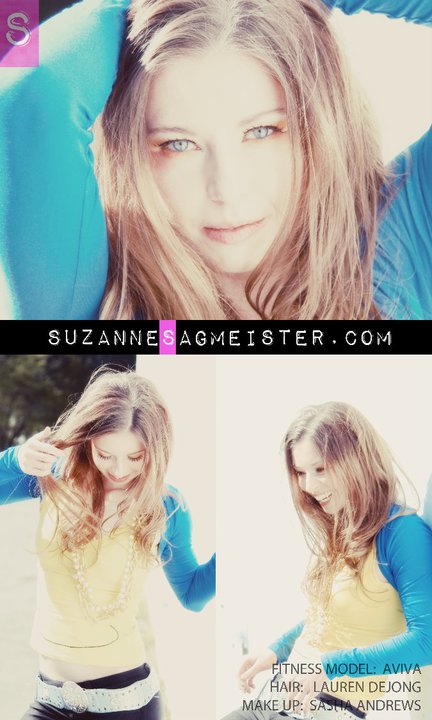
Results of Suzanne Sagmeister, Lauren of Vixen Hair Studio, Sasha Andrews and Aviva Collaboration


Hey guys,

A few weeks ago, Suzanne Sagmeister contacted me in order to collaborate on a shoot in Victoria, BC. I have always liked Suzanne's work and I was happy to work with her. :)


The hair stylist was Lauren from Vixen Hair Studio and the make-up artist was Sasha Andrews


Victoria has a lot of very cool and interesting locations to shoot and in the beginning we had some questions as to where we should be shooting. I was a little bit worried about my hair getting messy


Related Posts Plugin for WordPress, Blogger...